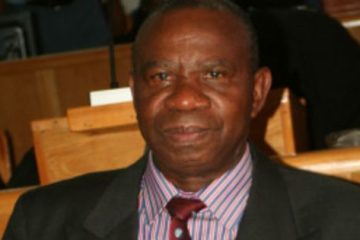
French prosecutors have urged the Paris Court of Appeal to sentence Rwandan doctor Eugène Rwamucyo to 30 years in prison, arguing that evidence presented during six weeks of hearings demonstrates a broader and more direct role in the 1994 Genocide against the Tutsi than the defense has acknowledged.
Rwamucyo was convicted in 2024 and sentenced to 27 years in prison for complicity in genocide. In the ongoing appeal, prosecutors are asking the court to convict him not only as an accomplice but also as a principal perpetrator of genocide, while maintaining charges of complicity in crimes against humanity. The court is expected to deliver its verdict on July 17.
Rather than focusing solely on Rwamucyo’s participation in the burial of victims, Prosecutor Aude Duret argued that the appeal proceedings reinforced allegations that the operation was part of a deliberate effort to conceal the genocide rather than a public health intervention.
Throughout her closing submissions, Duret relied on witness testimony and documentary evidence presented during the trial to portray Rwamucyo as a committed state official who knowingly supported the genocidal policies of Rwanda’s former government. She argued that he maintained close ties with members of the Coalition for the Defense of the Republic (CDR), an extremist political party known for its anti-Tutsi ideology.
One of the prosecution’s central arguments concerned Rwamucyo’s role in supervising and coordinating the burial of victims in Butare Province, where more than 214,000 genocide victims have so far been identified. According to the prosecution, these burials were conducted without any documented sanitary procedures, mapping of burial sites or records that could later facilitate identification and exhumation of victims.
Duret challenged the defense’s long-standing argument that Rwamucyo acted solely in his capacity as a public health physician seeking to prevent disease outbreaks. She maintained that the evidence presented during the appeal showed no official public health directives supporting such operations and instead pointed to an organized effort to erase evidence of mass killings.
Some buried victims were still alive
The prosecution also referred to testimonies indicating that some victims were still alive when they were buried and that a number of people survived the burial operations, evidence it argues demonstrates the brutality surrounding the concealment process.
According to Duret, Rwamucyo used his medical expertise in service of the genocidal administration, contributing not only to the physical destruction of victims but also to the attempted erasure of their memory. She argued that concealing the bodies represented “a continuation of the massacres” by preventing future identification and remembrance.
The prosecution’s sentencing request remains unchanged from the first trial in 2024.
The defense rejected those arguments, describing the requested sentence as disproportionate. Defense lawyer Alexandre Sztulman argued that prosecutors were criminalizing a physician’s professional duty, maintaining that Rwamucyo, a public health doctor, organized the burial of decomposing bodies solely to prevent epidemics during the genocide.
Lawyers representing civil parties disputed that interpretation, arguing that Rwamucyo occupied a key administrative position in Butare during the genocide. They contend that his responsibility extended beyond public health functions and that he played a coordinating role within the local structures operating during the massacres, even if he is not accused of personally carrying out killings.
The appeal verdict is expected on July 17.