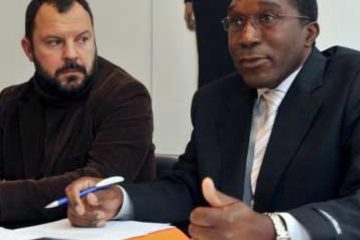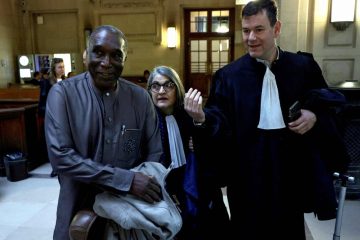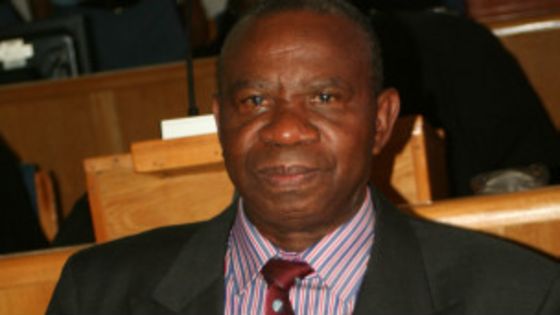
Former Rwandan Chief of Staff of the Gendarmerie Augustin Ndindiliyimana told the Paris Court of Appeal on Thursday that he had never heard of Dr. Eugène Rwamucyo during the 1994 genocide, testifying that the appellant was not known to Rwanda’s security services as an extremist or political figure.
Appearing by videoconference from Belgium, Ndindiliyimana was called as a defense witness under the discretionary powers of the presiding judge. The former senior military officer, who served as Chief of Staff of the Gendarmerie from 1992 until he left Rwanda in June 1994, opened his testimony by describing Rwanda’s history as “complex” and said many accounts fail to capture the realities experienced by those who lived through the conflict.
Never met Rwamucyo during the genocide
Questioned by the court about his relationship with Rwamucyo, Ndindiliyimana said he had never met him in Rwanda and had not heard his name during the events of 1994.
According to the witness, the two men first met years later in Belgium. He testified that Rwamucyo initially accused him of having betrayed Rwanda by collaborating with Belgian authorities but later apologized after concluding he had been mistaken. Ndindiliyimana said the two subsequently developed a relationship, with Rwamucyo defending him against accusations and proposing that they write a book together on Rwanda’s history.
“He is searching for the truth,” Ndindiliyimana told the court. “And that truth does not always please certain people.”
The defense later returned to the issue, asking whether, in his capacity as head of the gendarmerie and through intelligence reports available to him, Rwamucyo had ever been identified as an agitator or someone promoting ethnic hatred.
Ndindiliyimana answered that he had never received such information. He testified that Rwamucyo was not a known political figure in Butare and that his name had never been mentioned by the French military advisers who worked alongside the Rwandan gendarmerie.
Witness revisits his own wartime record
Much of the remainder of the testimony shifted away from Rwamucyo himself and focused on Ndindiliyimana’s own account of Rwanda’s history and his role during the conflict.
The former military chief reminded the court that he had previously been prosecuted before the International Criminal Tribunal for Rwanda (ICTR), where he was convicted at trial before being acquitted on appeal. He said the allegations had included participating in planning the genocide and failing to punish gendarmes responsible for crimes. According to his testimony, gendarmes whose crimes came to his attention were arrested and imprisoned.
Prosecutors challenge key assertions
During cross-examination, lawyers for the civil parties and Advocate General Aude Duret challenged several aspects of Ndindiliyimana’s testimony, particularly his interpretation of events in Butare and his repeated use of the expression “Rwandan genocide” instead of “the Genocide against the Tutsi.”
The Advocate General also confronted him with previous international judicial findings concerning the role of interim president Théodore Sindikubwabo’s speech in Butare and questioned his account of the chronology of the killings. Ndindiliyimana disputed those interpretations and maintained his own account of the events.
Testimony supports defense case
Despite the broader historical exchanges, the portion of Ndindiliyimana’s testimony most directly relevant to the appeal concerned his assessment of Rwamucyo. As a former head of Rwanda’s gendarmerie, he maintained that he neither knew the appellant during the genocide nor regarded him as a figure who had come to the attention of the country’s security services in 1994.