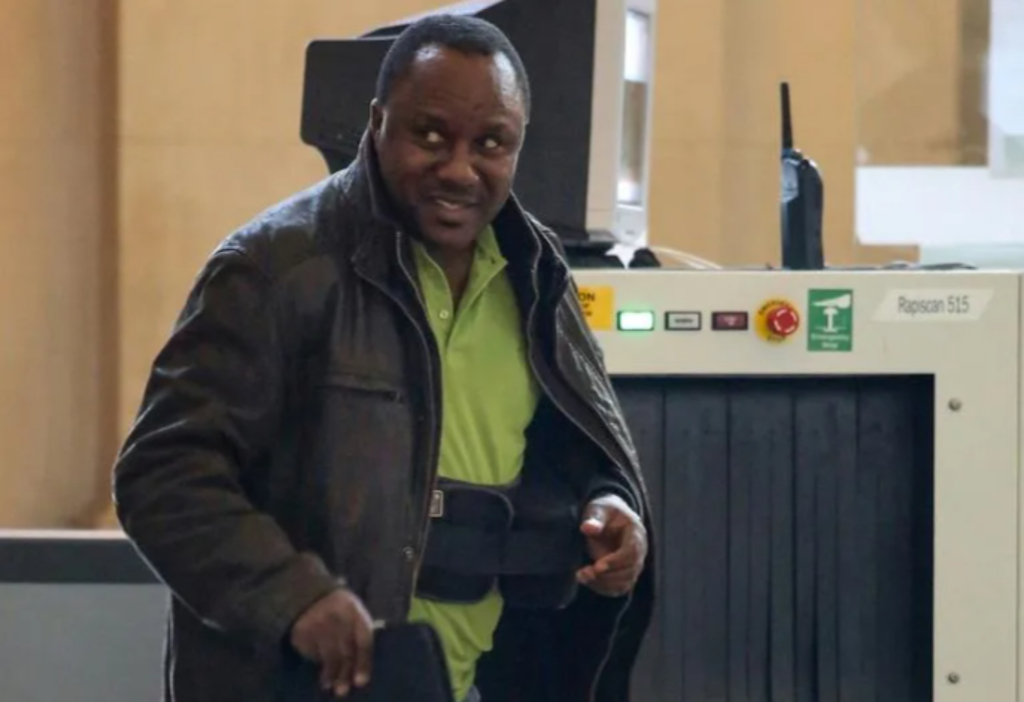
The Paris Court continues the trial of Claude Muhayimana, accused of complicity in the 1994 genocide against the Tutsi. The proceedings included the testimony of his ex-wife, Médiatrice Musengeyezu, cited by the prosecution, who recounted both personal and historical events connected to the accused and the genocide.
She explained that although the couple had been legally married, they separated after the genocide, and emphasized that her presence in court was to provide a truthful account of what she personally witnessed and heard. Musengeyezu had previously been heard on four occasions in connection with the case.
She provided details about the accused’s background, stating he told her he was very young when his father died, that his family was not originally from Kibuye, and that both parents were Hutu, contradicting claims that his mother was Tutsi. To her knowledge, no family members had been killed for being Tutsi. The witness described meeting him in 1986, initially living separately before renting a house together and later purchasing one, despite some family opposition. She also clarified that she had no knowledge of his detention in 1990, noting that although individuals accused of supporting the Rwandan Patriotic Front (FPR) were arrested, he was not among them.
The deteriorating security in Kibuye.
At the onset of the genocide, Musengeyezu recounted the deteriorating security in Kibuye following the assassination of President Juvénal Habyarimana on April 6, 1994. She described how neighbors’ attitudes toward Tutsi worsened after warnings broadcast over the radio and through local authorities. She narrated seeing explosions on the mornings of April 11–12 and described how displaced persons, including relatives, arrived seeking protection. On April 8, she hid at her ex-husband’s workplace, the Guest House, to avoid arrest, as several colleagues had been detained, noting that he had no political involvement at the time. She also explained that she did not follow him when he fled, traveling to Kenya while pregnant with their second child in an attempt to persuade him to return, but he refused, citing his unwillingness to live with a Tutsi.
Musengeyezu also addressed the fate of their children, who had been kept in France after 2006 under false pretenses. She clarified that the children traveled legally via Kanombe Airport and Belgium, disputing claims that she had used illegal channels or interfered in their care. Custody was eventually regained with the intervention of French authorities, while the Rouen tribunal had affirmed parental rights but allowed her visitation. She further described her ex-husband’s manipulation of narratives, portraying himself as a victim while she and others testified about his actions. She characterized him as a “manipulator and liar,” disputing claims of illness or imprisonment during the genocide and noting he had falsely claimed ownership of property in Kigali, whereas she and other survivors had purchased a house to shelter orphans.
Regarding the violence in Kibuye, Musengeyezu testified that he transported Interahamwe militias in a red Hilux vehicle marked “Guest House,” carrying up to 20 armed individuals who chanted threats against Tutsi residents. She recalled seeing him repeatedly in April, May, and June 1994 and recounted that he transported the body of a gendarme killed in Karongi to Ruhengeri for burial, remaining away for several days. She disputed his claim of being incapacitated during key attacks, emphasizing that his movements, driving armed militias, transporting bodies, and coordinating with local authorities demonstrated active participation. These accounts support the prosecution’s portrayal of him as directly involved in the logistics of violence during the 1994 genocide against the Tutsi.
Specific episodes of protection and escape during the genocide.
Musengeyezu recounted that she, her children, and relatives were threatened at home by Interahamwe, but that others assisted them in hiding or fleeing, including via boat and through Frères facilities. She clarified that her ex-husband played only a minimal role in these escapes, paying for one boat trip but not organizing the broader efforts. She described incidents involving survivors such as Delphine and Aurélie Cyubahiro, explaining how they and their families were protected or aided by others rather than by him. She also confirmed observing Interahamwe moving through Kibuye and Karongi, transporting people to be killed, and recalled conversations with relatives indicating imminent danger. She testified about attacks at Gatwaro Stadium, Home Saint Jean, and hospitals, describing the sequence of violence she witnessed and disputing claims that her ex-husband’s actions had saved anyone.
The witness further addressed ongoing threats and harassment against herself and other genocide survivors, including insults broadcast via radio and confrontations in public spaces. She refuted claims that she had provided documents to him in Kenya, asserting that after their separation she no longer worked for him or had any professional connection.
Musengeyezu also commented on prior court documents, intercepted communications, and accusations made by others, stating she had no reason to believe any allegations were part of a personal vendetta. She shared her own experiences during Gacaca proceedings and confirmed she had not testified in earlier CPCR or OCLCH hearings.
Her testimony extended to the effects of his actions on property, custody disputes, and her perception of his character, emphasizing that he sought to manipulate events to his advantage. She described the impact of her testimony on ongoing civil and legal matters, noting that he continues to deny responsibility while portraying himself as a victim.
The hearing included references to intercepted communications, documents recovered from his residence, and photographs of the family and home in Rwanda. Defense attorneys questioned her about her ability to view events from her home, her knowledge of his health, and her alleged influence over their children. Musengeyezu refuted claims questioning her credibility or alleging exaggeration of her losses, noting that only two members of her extended family remain alive today.