When the verdict against Dr. Sosthène Munyemana was read in a Paris courtroom, survivors in Tumba followed the news on small radios and phone screens. After thirty years, France’s conviction of the former gynecologist once known locally as the “doctor of Tumba” brought relief. However, it also reopened a painful question: who will repair what was destroyed?
“We waited decades for a verdict,” said one survivor, her voice steady but tired. “Now we are told reparations exist only on paper. How can justice stop there?”
The dilemma after justice
France’s Court of Assizes sentenced Munyemana to 24 years in prison for genocide and crimes against humanity committed in Tumba in 1994. Some survivors testified through the help of Ibuka France and the Collectif des Parties Civiles pour le Rwanda (CPCR), which joined the trial as civil parties.
Yet, as in previous European genocide trials, the verdict brought no immediate compensation. Victims of the 1994 Genocide against the Tutsi who live outside France are not automatically eligible for court-ordered damages unless they were formally registered as civil parties. Even when reparations are granted, they are usually symbolic, often €1 per claimant.
“The ruling honors memory,” said CPCR president Alain Gauthier in a press statement, “but for survivors in Rwanda, material justice is still missing.”
How reparations work and why few reach Rwanda
Under European law, especially in France and Belgium, genocide suspects can be prosecuted under the principle of universal jurisdiction if they reside in those countries. Victims or NGOs may join proceedings as parties civiles to seek damages.
Courts may order moral or material reparations, but the amounts depend on the accused’s means. Most convicts are indigent; the awards therefore remain symbolic.
Past cases illustrate the pattern:
- Pascal Simbikangwa (France 2014) — €1 symbolic damages to each civil party.
- Octavien Ngenzi & Tito Barahira (France 2016, 2021 appeal) — life sentences, symbolic reparations.
- Laurent Bucyibaruta (France 2022) — 20 years in prison, €1 moral damages to each association.
In the 2007 Belgian trial of Bernard Ntuyahaga, the court awarded a total of €540,000 in reparations to 21 Rwandan civil parties, survivors of the crimes he committed, including the murder of Belgian peacekeepers and Rwandan civilians. The court also granted nearly €90,000 to the families of the Belgian peacekeepers. While these amounts were significant, enforcement proved challenging, and some later reports listed slightly different figures, reflecting the symbolic nature of the reparations.
The legal bridge: exequatur
Legal experts point to one possible route for Rwandan survivors: exequatur, a procedure that allows a foreign judgment to be recognized and enforced in another country.
“You can have justice in Paris but need exequatur in Kigali to make it real,” explains Emmanuel Sehene Ruvugiro, a veteran Rwandan judicial reporter who covered both Arusha and European genocide trials.
Under Articles 509–509-9 of the French Code of Civil Procedure and Law No. 22/2018 on Civil, Commercial, Labour and Administrative Procedure in Rwanda, a Rwandan court can recognize a French decision if it respects due process and does not violate public order. Once granted, that recognition gives the judgment the same force as a local ruling, allowing survivors to claim damages or, if any assets exist, to enforce payment within Rwanda.
However, so far, few genocide-related cases have reached that stage. The process requires certified translations, legal representation, and identifiable assets, rare in these prosecutions.
What the law says, and what survivors feel
International frameworks support the survivors’ right to reparation.
- UN General Assembly Resolution 60/147 (2005) affirms victims’ rights to restitution, compensation, rehabilitation, satisfaction, and guarantees of non-repetition.
- Article 75 of the Rome Statute of the International Criminal Court echoes those rights.
- In Rwanda, the FARG Law (2001) and related decrees provide national support, though they do not automatically apply to foreign verdicts.
Despite these provisions, survivors say the distance between courtroom and community remains wide.
“My children ask if France will build our house again,” said a Tumba widow softly. “I tell them: France gave us truth but not yet repair.”
A call for cooperation
Ibuka France and CPCR are now urging both Rwandan and French authorities to establish a clear framework so that reparations ordered abroad can reach victims at home, possibly through a joint trust fund or bilateral enforcement agreement.
Legal scholars argue that the upcoming civil proceedings linked to the Munyemana conviction could test this cooperation. Rwandan lawyers suggest survivors should compile certified copies of the French judgment and pursue recognition petitions before the High Court, a move that would at least anchor the moral victory within Rwanda’s own legal record.
“Justice must travel the same road pain travelled,” Sehene noted. “Otherwise, it stops at the border.”
The road ahead
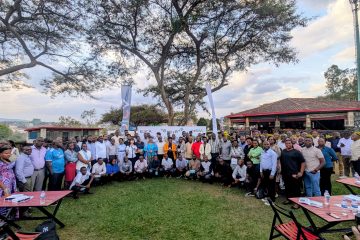
For now, Tumba’s survivors meet periodically. They speak of education for orphans, medical care, and roofs still waiting for repair. “We wanted the world to hear us, and it did,” said one elder. “Now we want to feel that verdict in our lives.”
Their hope, like their patience, endures: that a legal phrase pronounced in a Paris courtroom ‘justice est rendue’ will one day echo as truth in Tumba’s hills.