For eight years, Caritas Musanabera lived with a condition that gradually took away her dignity, independence and place in her community.
A resident of Nyaruguru District in Rwanda’s Southern Province, Musanabera developed fistula following a caesarean section. Her baby did not survive, and she began experiencing uncontrolled leakage associated with the condition.
The illness affected nearly every aspect of her life. Her family rejected her because of the unpleasant smell associated with the condition, while neighbors avoided her. Her marriage was also threatened as her husband struggled to cope with the situation.
To prevent leakage in public, she resorted to using thick cotton fabric covered with polythene paper.
“I had spent eight years having to pad myself with thick cotton fabric and polythene paper to avoid the embarrassment of dripping in public,” she recalled.
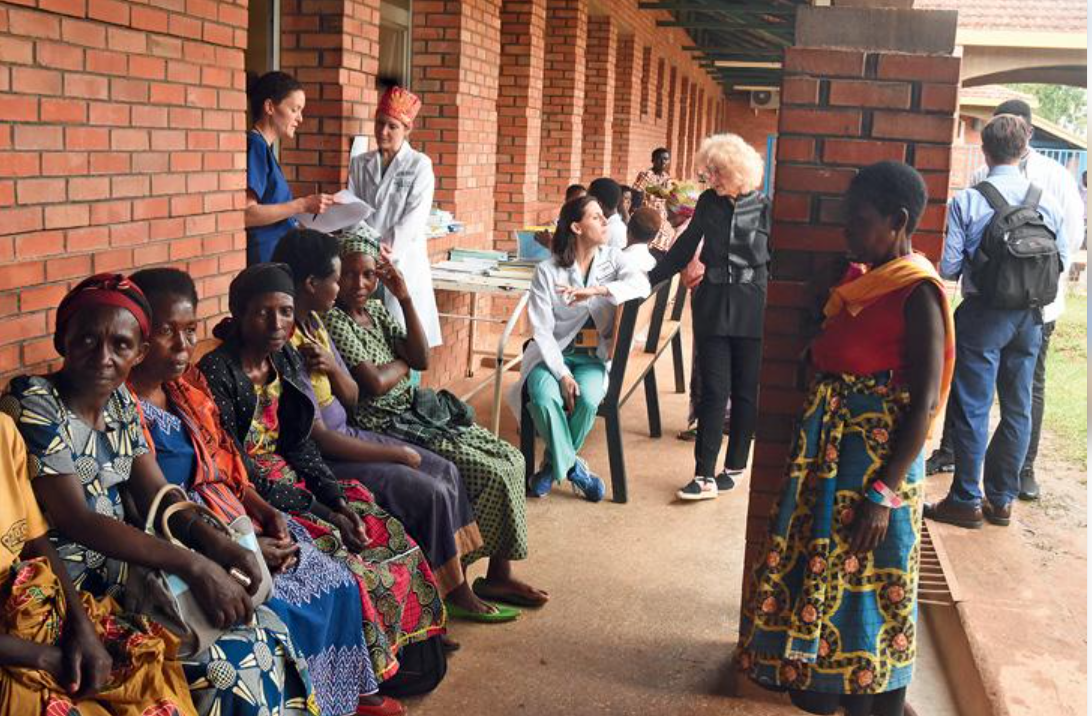
Her situation changed after a community health worker informed her about free fistula treatment available at Munini Hospital. After undergoing surgery, Musanabera recovered and was able to return to family and community life.
Her experience illustrates the consequences of a childbirth-related injury that can remain untreated for years, particularly when women do not know where to seek help or cannot access specialized care.
For Julienne Nyirandinabo, the condition followed a different medical pathway, but its consequences were equally disruptive.
In 2018, Nyirandinabo, a resident of Nyabikenke in Bumbogo Sector, Gasabo District, underwent a caesarean section to deliver her third child. She initially returned home with her newborn, but within days began experiencing severe pain and uncontrolled urine leakage through her surgical wound.
Her husband rushed her to the University Teaching Hospital of Kigali (CHUK). She was subsequently referred back to Kibagabaga Hospital, where she had delivered. As her condition worsened, the wound became infected and began discharging pus.
Doctors diagnosed her with a vesicocutaneous fistula, an abnormal connection between the bladder and the skin that caused urine to leak through the surgical wound.
At the time, few specialists in Rwanda could treat her condition. In October 2018, a team of specialists from the International Organization for Women and Development (IOWD) arrived in Rwanda and prepared her for corrective surgery. Her treatment was covered by Community-Based Health Insurance.
She remained in hospital for 15 days. For Nyirandinabo, one moment marked the beginning of a new chapter: being able to urinate normally after the catheter was removed.
“After the operation, the happiest moment of my life was being able to urinate normally. I danced and thanked God. It felt amazing to feel normal again,” she said.
Her recovery also opened an economic opportunity. Having trained in tailoring in 2015, she received a sewing machine from the organization in 2022 and began making uniforms, caps for health workers and other garments for members of her community.
Through her tailoring business and other work, she and her husband managed to purchase a house and land in 2025. Although she has recovered from the fistula, she says she can no longer lift heavy loads or undertake strenuous physical work.
A childbirth injury with lasting consequences
Musanabera and Nyirandinabo experienced different forms of genitourinary fistula. Obstetric fistula commonly develops when prolonged obstructed labor cuts off blood supply to tissues, creating an abnormal opening between the birth canal and the bladder or rectum. Other genitourinary fistulas can occur following surgical procedures.
The condition can cause continuous leakage of urine or faeces, infections, physical discomfort and social isolation. Its consequences may also affect family relationships, employment and women’s ability to participate in community life.
The scale and causes of fistula cases treated in Rwanda have also been examined by researchers. A study published in the International Urogynecology Journal in 2026 reviewed medical records of 909 women who sought treatment for genitourinary fistula in Kigali between 2013 and 2024.
Of these, 416 cases, representing 46 per cent, were classified as iatrogenic, meaning they occurred in temporal association with caesarean sections or hysterectomies. The remaining 493 cases, or 54 per cent, were classified as ischaemic, commonly associated with prolonged labor and tissue damage.
The researchers, including Migisha Desire of the University of Rwanda, also identified a significant increase in iatrogenic fistula cases over the study period, at an annual rate of 2.1 per cent. The study further found that women with different types of fistula could require different approaches to surgical repair.
The findings are relevant to Nyirandinabo’s experience, although they do not establish negligence in individual cases. They also highlight the importance of surgical safety, timely diagnosis and access to appropriate specialist care. A study published in BMJ Global Health in December 2025 provides a broader national estimate of obstetric fistula in Rwanda.
Researchers estimated that approximately 2,264 women aged 15–49 were living with the condition, with a 95 per cent confidence interval ranging from 1,477 to 3,481. Unlike hospital-based figures, this estimate was derived through statistical modelling using survey data and other health indicators, rather than a direct count of diagnosed patients. The findings suggest that the burden of obstetric fistula extends beyond women who reach specialized treatment facilities.
Treatment and the role of specialized care
At Kibagabaga Level Two Teaching Hospital, fistula treatment has involved collaboration between Rwandan healthcare providers and international specialists.
Immaculée Kantengwa, a midwife at the hospital, has described obstetric fistula as a serious childbirth injury with consequences extending beyond the immediate medical condition. She has identified early marriage and adolescent pregnancy, malnutrition, long distances to health facilities and delays in seeking skilled birth attendance among factors contributing to fistula cases in Rwanda.
According to Kantengwa, the hospital’s fistula program had examined 1,319 patients and performed 549 surgeries since May 2022, as reported in 2026.
The program has also involved international specialists working with local medical teams. Barbara Margolies, founder and executive director of the International Organization for Women and Development, has led specialist teams providing treatment and supporting the transfer of surgical knowledge to Rwandan healthcare professionals.
The collaboration has included training in diagnosis, surgical procedures and post-operative care. Specialists such as Dr. Stacey Knox, Dr. Saifuddin T. Mama and Dr. Star Hampton have participated in surgical outreach and training activities in Rwanda.
For patients, the availability of specialized treatment can mean the difference between years of untreated illness and the possibility of recovery. Nyirandinabo’s experience also demonstrates how medical intervention, combined with practical support, can help women regain economic independence.
Maternal healthcare beyond delivery
Rwanda’s Health Sector Strategic Plan V, covering July 2024 to June 2029, identifies improved healthcare quality, stronger health infrastructure and a more capable health workforce among the priorities for strengthening maternal and newborn services. The plan also emphasizes access to quality care through primary healthcare and improved service delivery across health facilities.
The Ministry of Health’s 2023/24 Annual Statistical Booklet recorded 318,462 mothers receiving their first postnatal check-up within 24 hours of delivery, compared with 214,168 attending the fourth postnatal care service. Although these figures concern postnatal care generally and do not specifically measure fistula follow-up, they provide an indication of the importance of continued contact with mothers after childbirth.
For women who develop serious complications, follow-up may involve more than routine postnatal checks. Their experiences can require specialized medical assessment, further treatment, rehabilitation and support to manage the physical and social consequences of the condition.
Rwanda has committed to improving maternal health under Sustainable Development Goal 3 and has set a national target of reducing maternal mortality from 105 deaths per 100,000 live births in 2023 to 60 by 2029, under its Health Sector Strategic Plan V (2024/25–2028/29). The strategy also prioritizes safer maternal care, improved postnatal services and stronger healthcare capacity.
For women such as Musanabera and Nyirandinabo, however, the challenge extends beyond surviving childbirth. Their experiences highlight the importance of ensuring that these national commitments translate into timely diagnosis, access to specialized treatment and sustained support for women living with childbirth-related complications. As Rwanda works towards universal health coverage by 2030, the measure of progress must also include women who survive childbirth but continue to live with its long-term consequences.