The trial of Madjaliwa Safari before the Paris Paris Assize Court is examining his alleged involvement in three incidents during the 1994 Genocide against the Tutsi in Rwanda: his alleged responsibility at the Chez Premier roadblock in the former Gitarama Prefecture, the murder of Ladislas Mwenerengwe, and an attack against members of the Abakono family.
The trial, which opened on November 17, 2026, is seeking to establish Safari’s individual responsibility in the events. During the first four days of proceedings, the court heard the accused’s account, examined historical evidence and received testimonies intended to shed light on the functioning of roadblocks during the genocide.
Safari, a businessman born in February 1966, has denied participating in the killings. He maintains that he was not a leader at the roadblock and that accusations against him are fabricated.
Alleged responsibility at Chez Premier roadblock
One of the central issues in the trial concerns Safari’s alleged role at the Chez Premier roadblock, where Tutsi were reportedly identified and targeted during the genocide.
According to the case presented to the court, Safari was allegedly among the assistants of a man identified as Premier, who was reportedly appointed by gendarmes from Butare to oversee the roadblock.
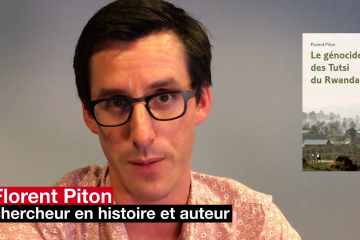
The organization and functioning of roadblocks became an important subject during the proceedings. On November 19, university professor Alain Verhaagen testified about how roadblocks operated during the genocide, explaining their role in identifying Tutsi and facilitating killings.
The court also examined information concerning the alleged responsibilities of individuals stationed at Chez Premier, including the distribution of weapons and the presence of people carrying machetes, sickles and clubs.
Safari, however, rejected the allegation that he was in charge of the roadblock. Addressing the court on November 18, he denied commanding anyone or directing people to kill.
He also claimed that his presence at the roadblock was not voluntary. According to his account, a gendarme informed him that his father had been injured and instructed him to report to the roadblock, warning that participation was compulsory.
Safari further explained that the grenades he possessed were given to him by the gendarme for self-defense because he feared being killed.
The murder of Ladislas Mwenerengwe
The second allegation concerns the murder of Ladislas Mwenerengwe.
During his questioning, Safari acknowledged being present at the roadblock when Ladislas was brought there. However, he denied killing him or participating in his death.
According to Safari, he and his father had gone to the roadblock to understand what was happening after noticing a large crowd. He said that, upon their arrival, gendarmes called him and questioned Ladislas.
Safari maintained that the killing was not his responsibility and insisted that he had not participated in the murder.
The attack against the Abakono family
The third allegation concerns an attack against members of the Abakono family.
Safari denied participating in the attack. However, he acknowledged going to the family’s home on one occasion, explaining that he had gone there to retrieve a child whom he claimed to have saved and subsequently entrusted to some women.
His explanation was presented during his questioning on November 18, when he again rejected accusations of involvement in the attack against the family.
Dispute over civil-party participation
Beyond the three allegations, the opening day of the trial also saw a disagreement over the participation of victims and organizations representing them.
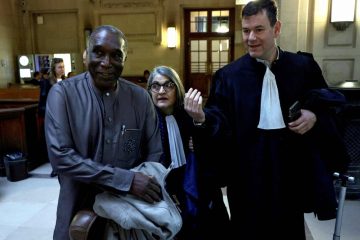
Safari’s defense lawyer, Françoise Mathe, challenged the admissibility of several civil-party applications, arguing that some applicants had no direct connection to the alleged crimes committed at the Chez Premier roadblock.
She requested that the court reject those applications and, alternatively, order further investigations and release Safari while those investigations were conducted.
Lawyers representing the civil parties opposed the request, maintaining that their applications were consistent with French law.
The prosecution also argued that civil-party applications could be submitted until the closing of the proceedings. The court deferred its decision on their admissibility.
Six organizations, including the Collectif des parties civiles pour le Rwanda (CPCR), IBUKA France, SURVIE, CAURI, CRF and LICRA, joined the proceedings alongside 204 individual civil parties.
A trial centered on individual responsibility
During the proceedings, lawyers representing the civil parties emphasized that the central question before the court was Safari’s individual responsibility for the alleged crimes, rather than broader political debates about Rwanda.
The defense, meanwhile, has challenged the accusations and questioned aspects of the historical accounts and evidence presented.
Safari also suggested that jealousy over his social and economic success could explain why people were accusing him.
As the proceedings continue, the court is expected to examine the testimonies, documentary evidence and other material relating to the three allegations.
Safari remains presumed innocent until the court reaches its verdict.